
From Hosta Hollow to Hosta Walk
How Rotary Botanical Gardens transformed a challenging woodland site into a living collection for conservation, education, research, and public enjoyment
By Andrea Geske, Public Horticulturist
Along the pond between the gazebo and observation pier, a once-overgrown woodland is becoming one of Rotary Botanical Gardens’ most ambitious living collections. The new Hosta Walk builds on decades of hosta stewardship while creating the space, organization, and interpretive potential needed for the collection’s future. With more than 150 donated cultivars already installed, the project has transformed an underused landscape into a permanent destination where visitors can experience the history and extraordinary diversity of the genus Hosta.

A Collection with Deep Roots
Hostas have long held an important place at Rotary Botanical Gardens. Hosta Hollow was developed and maintained in partnership with the Wisconsin Hosta Society, with support from donors including Joanne and Irwin Johnson and many society members. In 2003, the Gardens was accepted as an American Hosta Society Display Garden. A particularly significant part of the collection is its group of cultivars hybridized by Wisconsin plantswoman Eunice Fisher, whose work in hosta breeding and role in founding the American Hosta Society form an important part of the Gardens’ horticultural heritage.
Native to East Asia, hostas have been cultivated for centuries and became established in Western horticulture during the nineteenth century. Their modern range of colors, variegation, leaf shapes, textures, sizes, fragrances, and growth habits expanded dramatically through twentieth- and twenty-first-century breeding. Today, thousands of registered cultivars offer an exceptional record of horticultural innovation, but they also create a challenge for public gardens seeking to represent the genus meaningfully.
Why the Hosta Walk Collection Needed to Evolve

A 2026 assessment found a collection with strong foundations but clear opportunities
for improvement. Rotary Botanical Gardens already maintained several hundred hosta cultivars, including healthy, well-documented plants from reputable sources. Yet the holdings contained substantial duplication, many selections commonly available through retail channels, and limited representation of newer genetics. The cultivars were also dispersed throughout the Gardens, making comparison and interpretation difficult. Most importantly, Hosta Hollow no longer provided enough room for a genus with more than 9,000 registered cultivars and continued annual introductions.
The revised collection strategy preserves the historically important Eunice Fisher cultivars while broadening representation of rare, unusual, and modern hostas. Future acquisitions emphasize diverse genetics, distinctive ornamental qualities, documented provenance, landscape performance in southern Wisconsin, and material that is difficult to find in conventional commerce. Ethical sourcing from specialty growers, hybridizers, collectors, public gardens, and hosta organizations will remain essential.
Restoring a Woodland Site
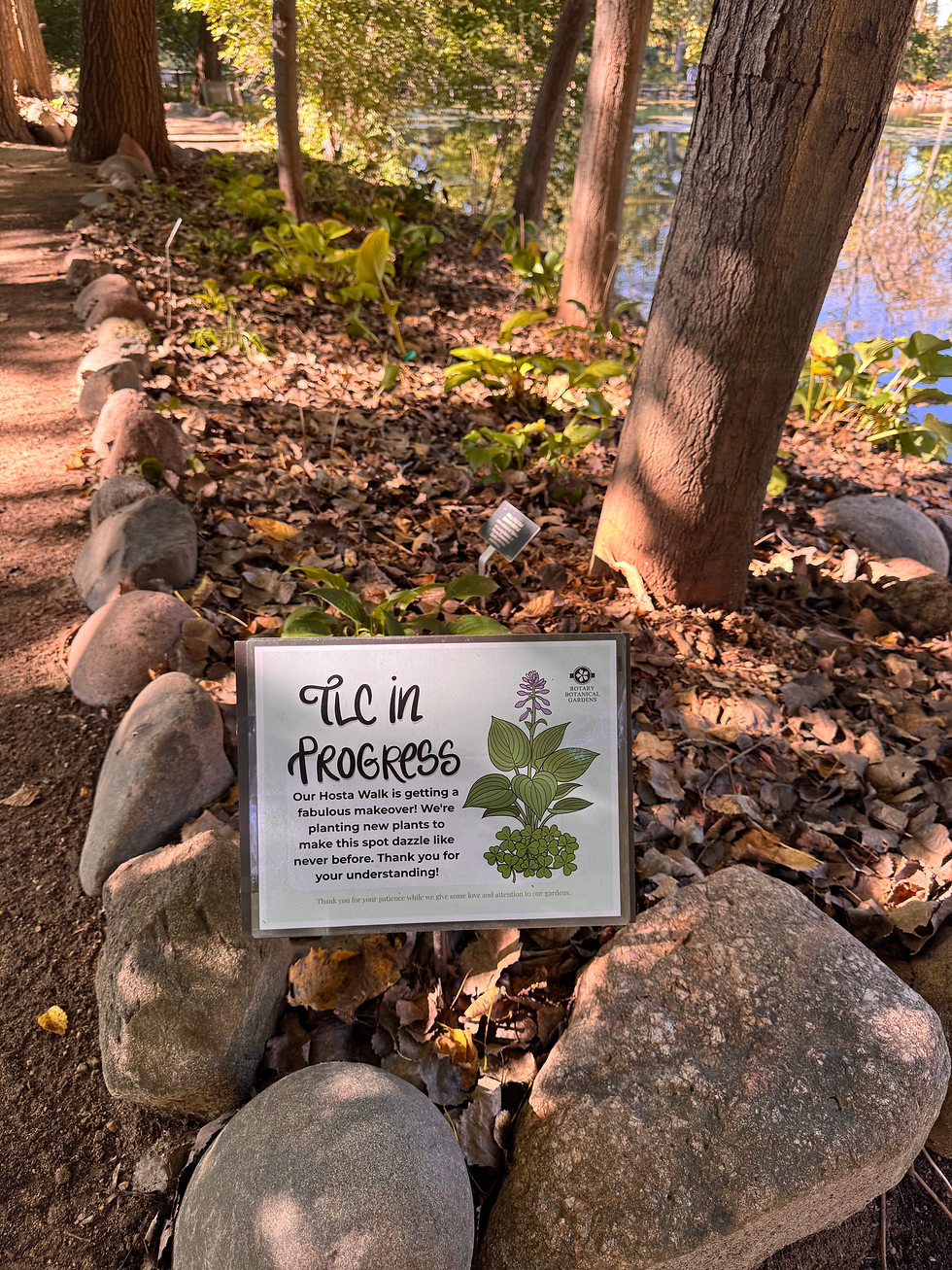
The walk’s new location offered mature shade, generous space, existing paths and seating, dependable irrigation, and a natural slope toward the pond. It also presented significant challenges. Beds were heavily infested with weeds, existing perennials had become overcrowded, the tree canopy limited available light, and soil testing indicated a pH of 7 with phosphorus and potassium readings of 120 and no measured ammonia nitrogen. The sloped terrain and proximity to water also required careful planning for installation, maintenance, and volunteer safety.
Work began on August 3, 2026, with removal, clearing, and site preparation. Non-hosta plants were removed to create a clean foundation; suitable material could later return as companion planting or be relocated to the new stumpery. The team renovated beds, addressed soil needs with compost and targeted fertility, retained mature spacing between hostas, and used weed barrier and mulch to suppress regrowth, conserve moisture, moderate soil temperatures, and reduce long-term labor. Selective canopy management may provide additional light as the garden develops, while deer pressure will require continued attention.
Building a Living Reference Collection

Every accession is intended to function as more than a display plant. Each cultivar will be mapped and documented with its name, provenance, mature size, bloom color, introduction date, location, health, growth characteristics, photographs, and other observations. Long-lasting laser-engraved labels will connect visitors to the plants, while internal records will support collection management, historical research, performance evaluation, and future breeding work. Volunteer bloom counters will continue to provide regular observations, with the full inventory reviewed at least annually to assess viability and each cultivar’s contribution to collection goals.
Plant health and sanitation are central to the collection’s integrity. Donations and purchases will come from sources familiar with hosta sanitation and the signs of viral disease. Staff will monitor plants closely for Hosta Virus X and other concerns, evaluate questionable specimens, including the ‘Gold Standard’ near the gate, and maintain records for accessioning, relocation, and deaccessioning. This disciplined approach protects both the historic holdings and the new genetics being assembled.
A Garden for Learning and Discovery

The Hosta Walk is designed to serve gardeners, families, students, landscape professionals, researchers, and plant enthusiasts. Visitors will be able to compare mature plants, observe bloom timing and pollinator activity, and learn about hosta history, taxonomy, breeding, cultivation, disease prevention, and landscape use. Over time, interpretation can organize cultivars by hybridizer, origin, historic significance, and distinctive traits, supported by signage, tours, classes, and digital resources.
Although hostas are the focus, companion plantings will build a layered woodland experience: hellebores for spring; hostas, grasses, martagon lilies, and other shade-tolerant perennials for summer; and the surrounding trees for autumn color and winter structure. The collection will also provide a platform for evaluating sun tolerance, ornamental value, disease resistance, environmental adaptability, pollinator support, and long-term garden performance. Its genetic breadth may eventually support hand crosses and a formal breeding and introduction program at Rotary Botanical Gardens.
Community Support Makes Growth Possible

The first phase demonstrates what horticultural partnerships can accomplish. More than 150 cultivars were acquired entirely through donations from hosta sellers and hybridizers who understand the collection’s sanitation standards. Because plant material was donated, the estimated project budget was approximately $500, primarily for weed fabric and new labels, with minimal spending planned for companion plants. Inventory verification was completed by Melissa and Sue on August 3, acquisitions were assembled by August 12, and installation followed on August 17; documentation and mapping continue as ongoing responsibilities.
A Long-Term Vision for the Upper Midwest
The goal is larger than the completion of a single garden. Rotary Botanical Gardens is working to establish one of the Upper Midwest’s premier public hosta collections: a professionally curated, ethically sourced, and continuously evaluated living resource. Partnerships with hybridizers, collectors, universities, public gardens, specialty nurseries, and the American Hosta Society will help secure uncommon plant material, exchange knowledge, strengthen conservation, and expand opportunities for research and education.

Much remains to be done. Companion plantings will be added, the collection may expand, labels and mapping will be completed, and the demanding site will require continued fertility management, deer protection, and thoughtful maintenance. Yet the transformation is already clear. What was once an overgrown and difficult woodland has become an intentional garden where horticultural history, modern breeding, community generosity, and responsible stewardship meet. As the Hosta Walk matures, it will preserve valuable plants, reveal the breadth of a beloved genus, and invite future generations to learn from a collection that is still growing.


Comments